
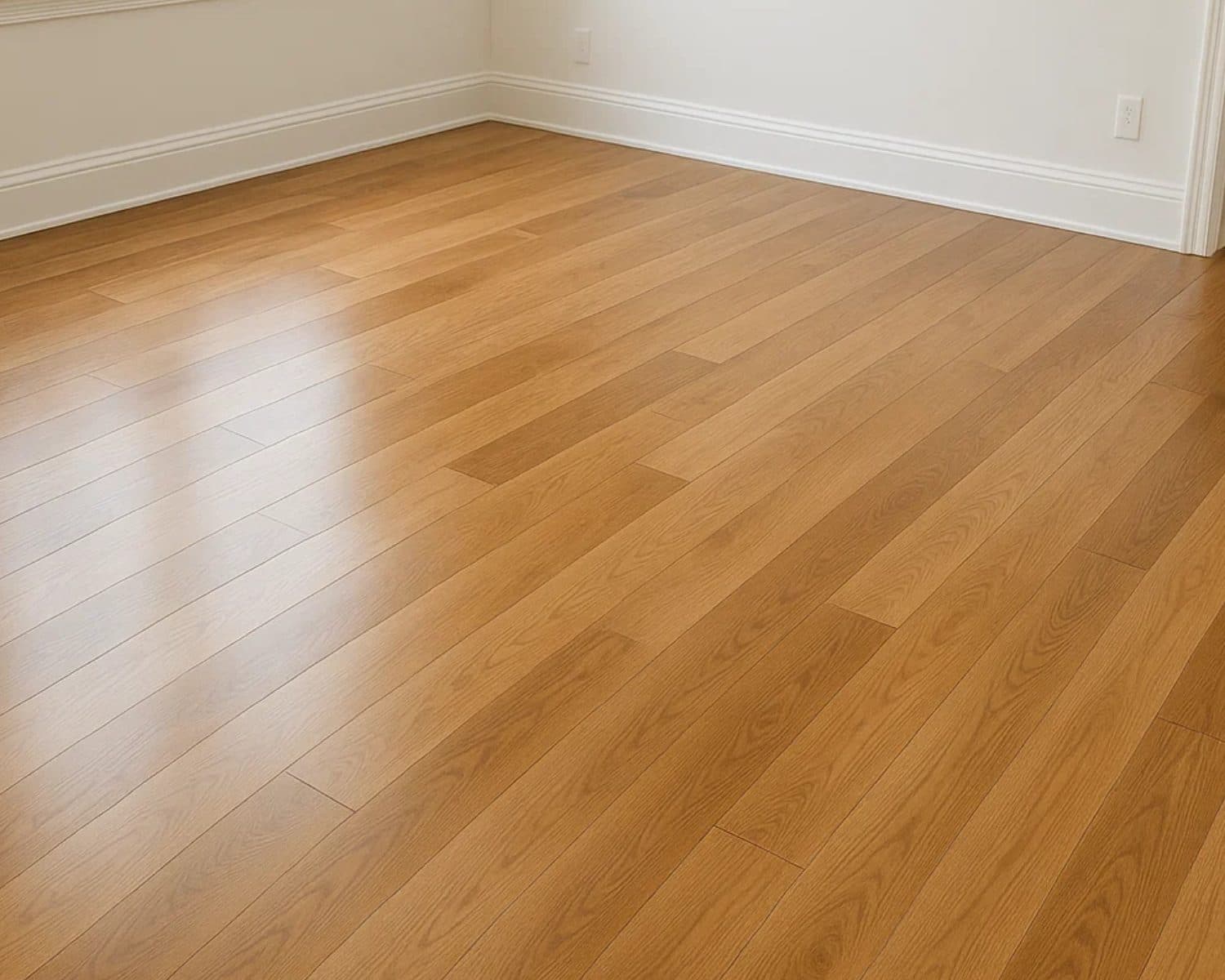
Every April the same thing happens in Lexington. The pines let go, cars turn yellow overnight, and by the second week of the month there's a faint yellow-green film along the hallway floor that nobody remembers tracking in.
Pollen is the visible version of something that's going on all year. Fine grit comes in on shoes, paws, and grocery bags, it spreads out from the doors, and every footstep drags it a fraction of an inch across the finish. One step does nothing you could see. Ten thousand steps leave a dull, slightly gray lane down the middle of the hall.
The finish on your floor is a thin layer of plastic-like coating on top of the wood. Grit wears that coating down. Keep the grit off and the finish lasts years longer. It is that simple, and that tedious.
Where the dirt actually comes from
Most of it enters through two or three doors. In a lot of homes the garage door into the kitchen is the worst, because that's how everyone comes in and nobody stops to wipe their feet. Sandy soil from the yard and the driveway rides in on shoe treads and drops off within the first ten or fifteen feet.
The kitchen collects its own kind of mess. Crumbs get stepped on and ground into sharp little bits. Drips by the sink and the dishwasher leave spots that hold dust. Oil from cooking settles on the floor in front of the stove.
Pets add their own lanes. A dog that goes in and out the back door twenty times a day carries yard grit every trip, and whatever path leads to the water bowl usually wears first. Their nails also leave fine scratches, mostly in the finish, which collect dirt and look darker over time.
How the seasons change things
Summer here is humid, and wood takes on a little moisture from the air and swells. Boards press tighter together. Muggy air also makes dust and footprints stick and smear a bit more than they do in winter.
Winter runs the other way. The heat is on, the air dries out, and boards shrink slightly. Small gaps can open between them, and those gaps catch grit and crumbs. That seasonal movement is normal for solid hardwood. The dirt that collects in the gaps is the part you can do something about.
Rainy weeks are a special case. Wet shoes leave muddy prints that dry into a fine powder, and then that powder gets walked around the house. Mats at the door matter most on those days.
Why wet mopping backfires
Plenty of people mop hardwood the way they'd mop tile: a bucket, a string mop, and a good soaking. It feels thorough.
Wood and water don't get along. Water left standing on the floor creeps into the seams between boards and under the edges of the finish. Over time you'll see it as darker edges along the boards, a slight cupping where the edges rise, or a cloudy white look in the finish. Steam mops add heat on top of that, which is harder still on many finishes.
There's a second problem too. If you mop before you've gotten the dry grit up, the mop just pushes wet sand around. You are scrubbing the floor with it.
The fix is a damp microfiber pad, barely wet, after the floor has been vacuumed or dust mopped. If you can see water standing behind the pad, it's too wet.
A routine that fits real life
Every day, or most days
Spend two or three minutes with a microfiber dust mop on the stretch just inside each outside door and wherever people first stop: the kitchen, the stairs, the family room. You don't need to do the whole house. Just get the entry lanes before the grit spreads.
Wipe spills when they happen with a cloth, and dry the spot.
Once a week
Vacuum the whole floor with the beater bar turned off or with a hard floor head. Then go over it with a damp microfiber pad, a light mist of hardwood-safe cleaner sprayed on the pad, not on the floor. Work with the grain. Dry any spot that stays wet.
Shake out the door mats while you're at it. A mat full of sand is just handing that sand to the next pair of shoes.
Once a month
- Lift area rugs and vacuum underneath. Grit trapped under a rug grinds against the floor every time the rug shifts.
- Check the felt pads under chairs and table legs. Worn-through felt or a pad with a bit of grit stuck to it scratches the floor worse than no pad at all.
- Look at the floor in low morning light, from a crouch. You'll spot dull lanes and sticky patches you never see standing up.
Trim the dog's nails while you're thinking about it.
What a professional clean adds
Home care slows wear down. Eventually, though, most floors build up a layer of residue from years of cleaners, plus soil packed into the bevels between boards. A dust mop won't touch that, and more mopping just adds to it.
That's the point where our hardwood floor cleaning helps. We use a pH-neutral cleaner and very little water, which lifts the old film and packed soil without wetting the seams. It works on any finished wood floor, including engineered and prefinished. Your technician will walk the floors with you first and tell you the price before starting.
To be clear about the limit: we clean wood floors. We don't sand or refinish. If the finish is worn through to bare wood in the traffic lanes, cleaning will make the floor look better, but bare spots need a refinisher.
Can't tell if your dull spots are dirt or wear? Drop us a line on the contact page with which rooms are hardwood and what you mop them with now. That second detail tells us more than you'd think.