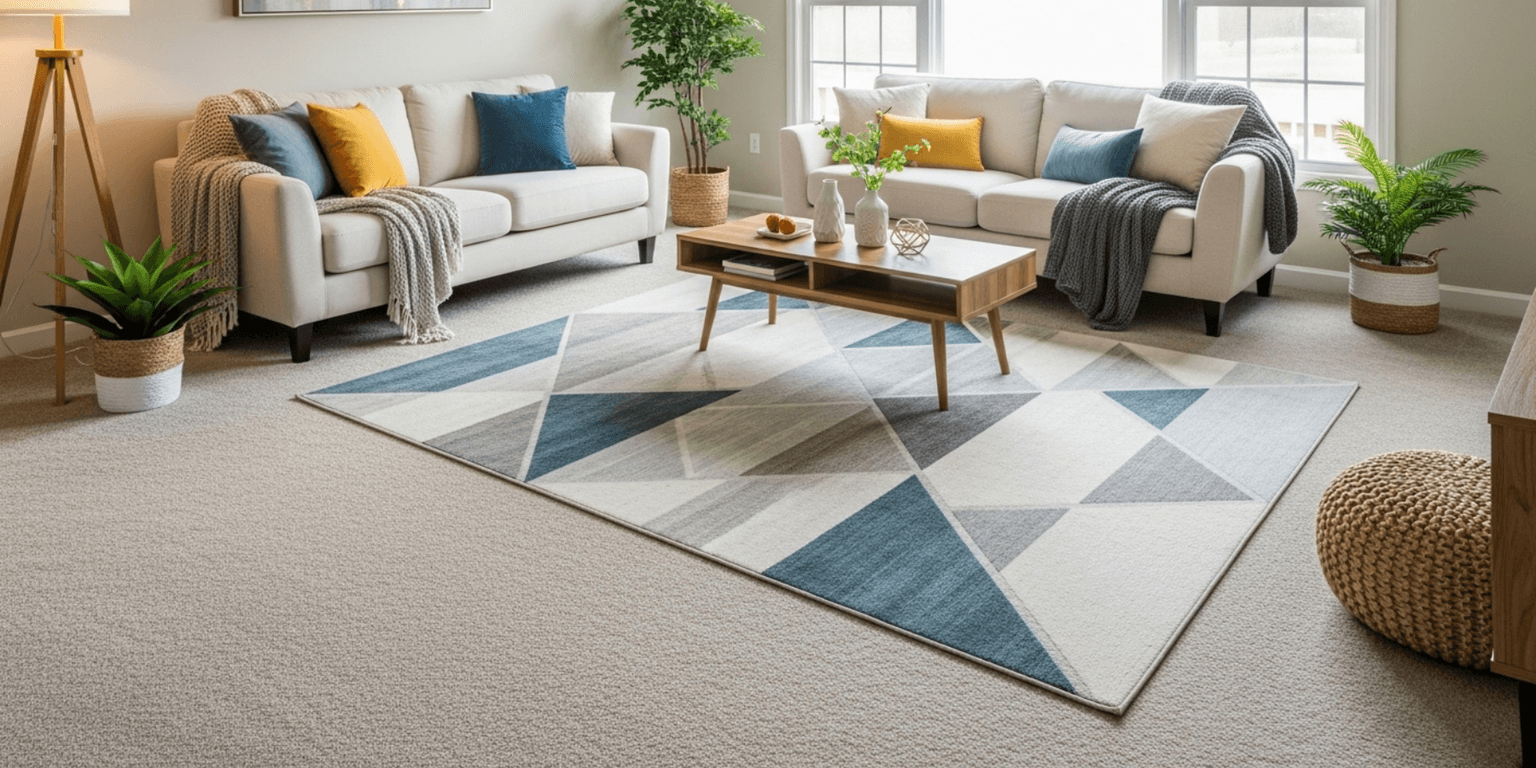
The rug under the coffee table takes more abuse than any carpet in the house. Shoes stop on it. The dog naps on it. Somebody always sets a sweating glass of tea on the corner. By the time it looks dull, fine sand has packed itself down around the roots of the fibers, and that's where the wear actually starts.
We clean area rugs right where they lie. Nothing gets rolled up and hauled to a plant, there's no pickup or drop-off to arrange, and the rug is usually back under the furniture the same day.
How an in-home rug cleaning goes
It starts with a close look. Your technician checks what the rug is made of and how it was put together, then tests the dyes in a hidden corner. Stains, odor spots and loose fringe all get pointed out up front, along with the price for the whole job.
Dry soil comes out next. Plenty of cleaners skip this step, and they shouldn't. Wetting a rug that's still full of grit turns the grit into mud, and mud is hard on both fiber and color. Loosening it and pulling it out first protects the rug.
After that, a pre-treatment goes on the heavy areas, and our carbonated solution lifts what's left. Very little moisture is involved. That's what keeps dyes from moving, and it keeps any hardwood under the rug dry.
Spills and pet accidents get their own treatment. For urine, an enzyme breaks down the organic material so the odor actually leaves the rug. Spraying something that smells nice over it would only buy you a week. Wine, coffee and ink get spot work matched to the fiber.
A light rinse with a residue-free solution follows, then grooming to stand the pile back up. If you want it, the tech can finish with a fiber protector so the next spill sits on top long enough to blot. Most rugs are dry in a few hours.
Different fibers, different handling
Wool and silk
Wool is forgiving and cleans up well, though it dislikes heat and high pH, so it gets a gentle, pH-balanced product. Silk is the opposite of forgiving. It water-marks easily and loses its sheen if it's handled roughly. Silk rugs get the lightest touch we have and a careful dye check first.
Cotton and jute
Flatweave cotton rugs are common in kitchens and kids' rooms, and they clean easily. Jute and sisal are trickier. Plant fibers can turn brown when they get wet, so they get the driest cleaning of any rug we see. If a stain on jute is likely to stay, you'll know that going in.
Synthetic rugs
Most machine-made rugs from big-box stores are nylon, polyester, or olefin. They hold up to cleaning well and give up a lot of soil. Olefin in particular grabs oil, so a rug near the kitchen or the grill door often looks much better after one visit than its owner expected.
Shag and high pile
Deep pile hides a surprising amount of grit near the backing. These rugs take extra dry soil removal and extra grooming, but they come back fluffy.
Cleaning schedule and price
Every 12 to 18 months suits most rugs. Entry rugs do better on the shorter end, and so does any rug a toddler crawls on or a dog sleeps on. If a rug has a pet problem that goes deeper than the surface, the enzyme treatment we use for pet urine can be added to the same visit.
Rug cleaning carries a $25 discount (see current coupons). Phone us at 803-310-5135 with the size and fiber if you know them. Not sure what it's made of? Leave a message on the contact page and we'll call you back to sort it out.