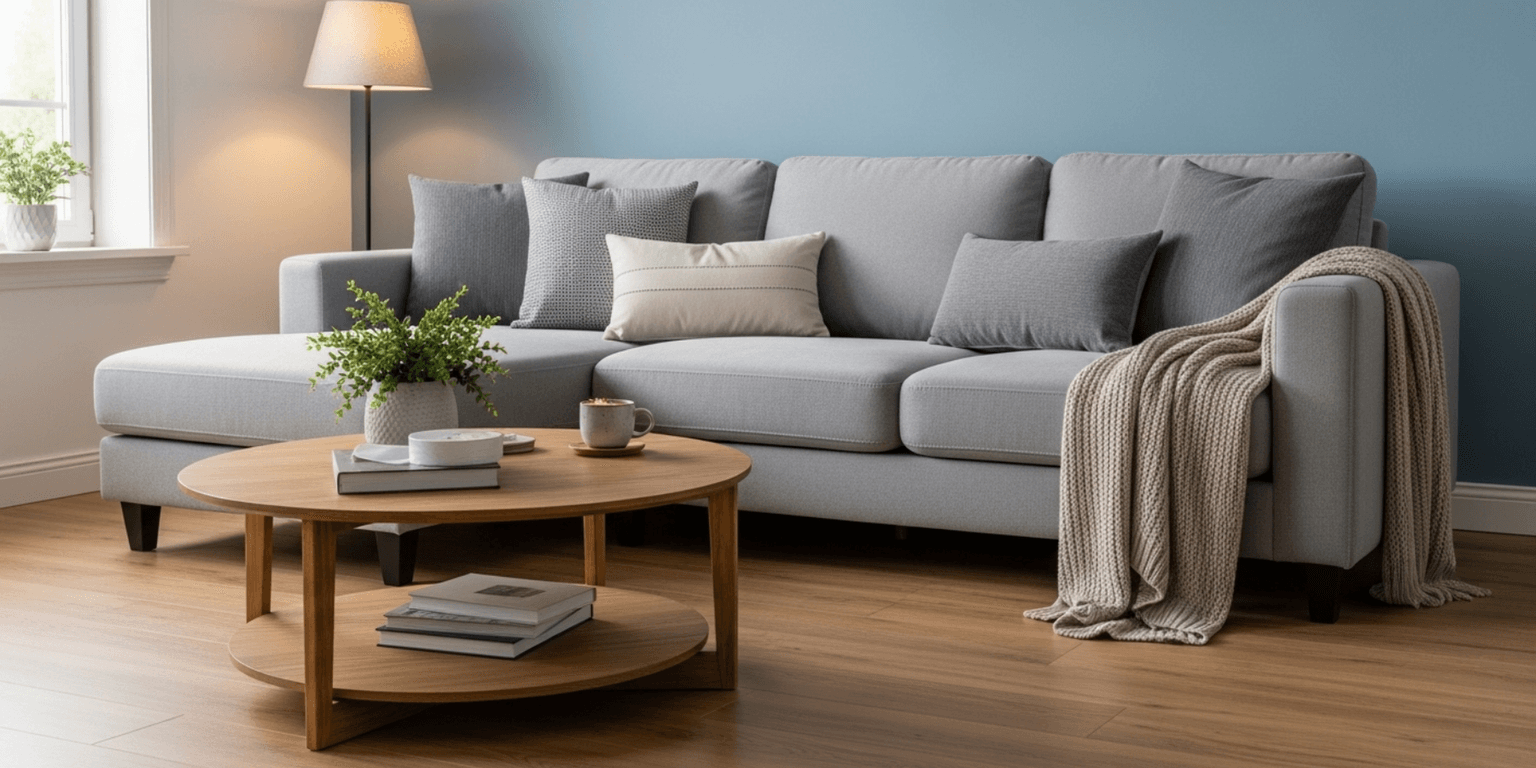
A typical call sounds like this: the sectional is six years old, the cat has claimed the left arm, and the middle cushion has a dark spot nobody will admit to making. That sofa is a great candidate for cleaning. A lot of furniture people are ready to haul to the curb only needs the body oil and soil taken out of it.
Furniture we work on
- Sofas, couches and sectionals
- Loveseats and recliners
- Accent chairs and ottomans
- Dining chairs with fabric seats
- Mattresses
- Office chairs and other office furniture
- Patio cushions that spent the summer on the porch
The fabric check comes first
Nearly every piece has a cleaning code, usually on a tag under a seat cushion. W means water-based cleaning is fine. S means solvent only. X means vacuum only, and nothing wet should touch it.
Your technician reads that code, then tests the fabric somewhere nobody will ever see. Microfiber and cotton usually clean up beautifully. Linen can be fussy about water marks, so it gets less moisture. If a piece is coded X or reacts badly to the test, we leave it alone and tell you why.
One honest warning about older furniture: some fabrics from the 1980s and 1990s, especially velvets and rayon blends, can shrink or lose their nap with any water at all. If the test spot shows that, the tech will stop. A dull sofa beats a ruined one.
Leather gets its own look. Many finished leathers clean and condition nicely, but aniline and other unfinished hides stain easily, so the finish has to be checked before anyone promises anything.
How the cleaning works
A pre-treatment goes on first to break up skin oil and food, along with the grime that collects on arms and headrests. Carbonated cleaning comes next: fizzing solution works the grime out of the weave, and extraction carries it off. The fabric ends up damp but never soaked. That matters more on furniture than anywhere else. Soaked foam takes days to dry, and in a humid house it can start to smell long before it does.
Pet odor gets the same enzyme treatment we use on carpet. For a household with allergies or a recent round of the flu, an antibacterial sanitizer can go on after cleaning. A fiber protector is available at the end too, which helps spills sit on top long enough to grab a towel.
The tech grooms the nap so it dries even, then goes over each piece with you before leaving.
Drying time
You can usually sit back down in roughly an hour. Deep seat cushions dry slower when the air outside feels like soup, and a ceiling fan pointed at the sofa helps more than you'd think.
Pets and upholstery
Cats and dogs leave dander, body oil, and now and then an accident. The oil and dander come out with a regular cleaning. Urine in a cushion is harder because it soaks into the foam, and very old spots may need more than one treatment to fully clear. A quick sniff and a look at the cushion usually tells your technician how far it has gone. If the problem runs deeper, read how our pet urine treatment works.
How often
Every 12 to 18 months for furniture that gets daily use, sooner if the dog sleeps on the couch or the kids eat dinner on it. Pairing the sofa with the rug in front of it, or the carpet in the same room, means one visit, and everything dries at the same time.
Getting a price
There's a $25 upholstery discount listed with our coupons. Phone 803-310-5135 with a rough list of pieces, or type it into the contact form. Your technician confirms the price in person before any cleaning starts.