
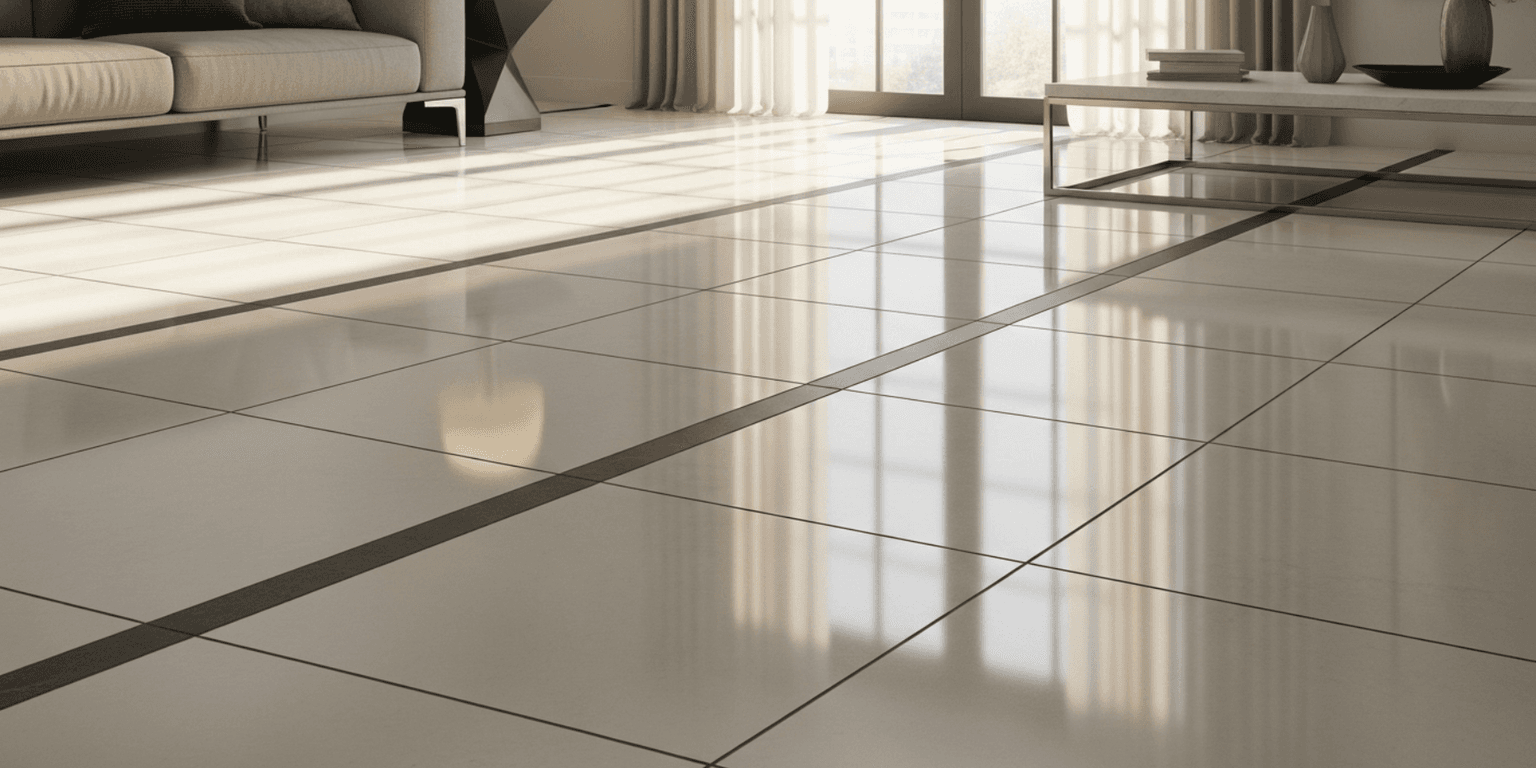
Look at the grout right in front of your stove, then pull the trash can out and look at a line that's been hiding behind it. The difference between those two colors is almost all dirt. Grout is porous, and every time you mop, a little dirty water settles into it and dries there. A few years of that and light gray grout reads as charcoal.
A mop can't fix it, because the mop is how it got that way.
How the buffer gets into grout lines
Every tile job here gets a machine buffer. Think of a heavy rotary scrubber fitted with brushes that scrub the face of the tile and reach down into the grout lines at the same time, working the buildup loose from the pores. Hand scrubbing with an old toothbrush gets you a few feet of clean grout and a sore back. The buffer covers a whole kitchen in a fraction of the time, and it gets more out.
Here's the order things happen in.
Before the machine comes out
Your technician checks the tile type and the condition of the grout. Ceramic and porcelain take a firm brush. Softer natural stone like travertine or marble gets a gentler pad, stone-safe products, and a test spot. Any cracked or missing grout, or etching already on the stone, gets pointed out before work begins, and so does the price.
Then a pH-balanced pre-treatment goes down to soften grease and soap film, plus the dull layer that years of foot traffic leave behind. It's non-corrosive. We never use bleach or acid. Both eat at grout and can dull or etch tile, which is the opposite of what you're paying for.
Scrub, extract, rinse
The buffer does the heavy work, agitating the tile surface and the lines together. Extraction pulls up the loosened soil along with the solution, and a clean-water rinse follows so nothing is left behind to attract new dirt. Stubborn stains get targeted spot work. Very little water stays on the floor, and you can usually walk across it in socks soon after the tech packs up.
If you want one, an antibacterial treatment is the last step. It makes the most sense in bathrooms.
Where we clean tile
Kitchens and breakfast nooks. Bathroom floors, shower walls and tub surrounds. Laundry rooms, mudrooms, entryways, hallways, and the occasional tiled garage. We also clean tile for local businesses, including office break rooms, shop floors and lobbies.
What to expect from old grout
Most dark grout comes back close to its original color, because most of what darkens it is dirt sitting in the pores. Grout that's stained through its whole body, from years of colored cleaners or a spill that soaked in deep, may lighten a lot and still not match. Cracked or crumbling grout needs a tile contractor. And if black mildew comes back in your shower a few weeks after a cleaning, water may be getting behind the tile, which is also a job for a contractor.
You'll hear all of that while the tech is still looking at the floor, before the buffer even comes off the van.
Keeping it clean longer
Sweep or vacuum before you mop so you aren't pushing grit into the lines. Pick a pH-neutral floor cleaner and dump the bucket as soon as it looks cloudy. Rinse with plain water after any cleaner, since leftover product is sticky and grabs dirt. A year to a year and a half between professional cleanings suits most floors; busy kitchens and entries want the short end of that.
Pricing and further reading
Tile jobs come with $45 off when you use the tile coupon. To talk through your floors, call 803-310-5135 or drop a line through our contact page.
For a deeper look at stone, showers and grout, our sister site Tile Done Right explains how a buffer pulls years of grime out of grout lines.