
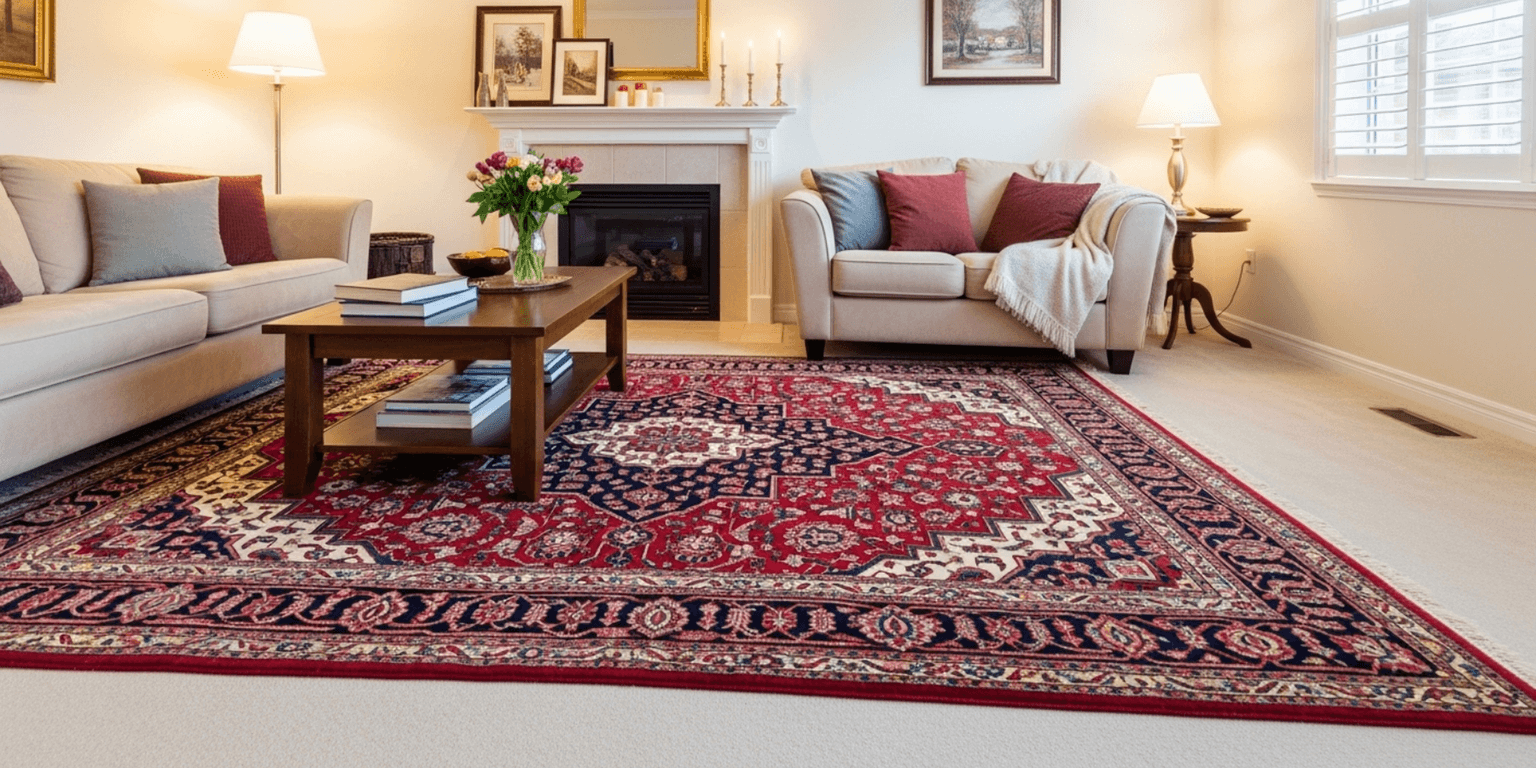
Turn up one corner of your Oriental rug and study the underside. If every knot shows and the pattern on the back mirrors the front, odds are very good it was knotted by hand. It deserves a slower, more careful cleaning than anything off a machine loom.
That's what this service is for. Persian and Turkish rugs, Indian and Chinese pieces, tribal and village weavings: we clean them in your home with one goal in mind, which is getting the dirt out without moving the dyes or stressing the foundation.
Why hand-knotted rugs need their own approach
Natural dyes and cotton foundations react to water and harsh chemistry in ways a synthetic rug never will. Soak one and the warp threads can shrink unevenly, which makes the rug ripple or curl at the edges. Use the wrong product and a red border can bleed into the ivory field. Neither of those can be undone.
On the other hand, dense wool pile is a terrific filter. It holds pollen and pet dander, plus dust mites and fine grit near the base of the knots, and that grit works like sandpaper every time someone crosses the room. A good rug cleaned on a regular schedule can outlast the people who bought it.
Our eight steps, in order
- Inspection. Your technician identifies the fiber and the weave, notes any wear or damage, and gives you the price.
- Dye testing. Each color gets checked in an out-of-the-way spot. If anything moves, we change course or stop.
- Dry soil removal. Dusting tools get out the grit a vacuum leaves behind, so it can't turn to mud once cleaning begins.
- Pre-treatment. Spills and pet spots get a soap-free pre-treatment with no added fragrance, and so do the traffic paths.
- A gentle carbonated clean. Bubbles lift oil and soil to the surface for extraction without soaking the foundation.
- Odor and allergen treatment. Where there's urine or a musty smell, an enzyme breaks it down at the source.
- Rinse, plus optional protection. A residue-free rinse, then a fiber protector if you'd like one.
- Hand grooming and a last check. The pile gets brushed back into line by hand, and the tech goes over the whole rug with you.
Because so little water goes in, most rugs are dry within a few hours and lying in their usual spot by evening. No shrinking, no bleeding, no truck ride across town.
When we'll tell you no
Some rugs shouldn't be cleaned on a living room floor. Dyes that run during the test need a specialist. So do broken warps, moth damage, dry rot, and fringe that's coming apart. Those rugs need a repair shop or a full immersion wash, and we don't do either. The tech will stop, explain what they found, and you won't pay for a cleaning that didn't happen.
We'd prefer to lose the job than gamble with a rug your grandmother carried home from overseas.
Caring for it between cleanings
Turn off the vacuum's spinning brush, or raise it, and keep the vacuum away from the fringe entirely. Rotate it end for end twice a year so afternoon sun through a west window doesn't fade one side. For spills, dab with cold water and a light-colored cloth, and resist the urge to rub. A good rug pad keeps the back from wearing against the floor and stops the rug from creeping.
Plan on a professional cleaning about every year to year and a half, a little sooner in an entry or under a dog's favorite napping spot. Our $25 rug coupon applies. Ring 803-310-5135 with the rug's rough size and age, or describe it through the contact page.