
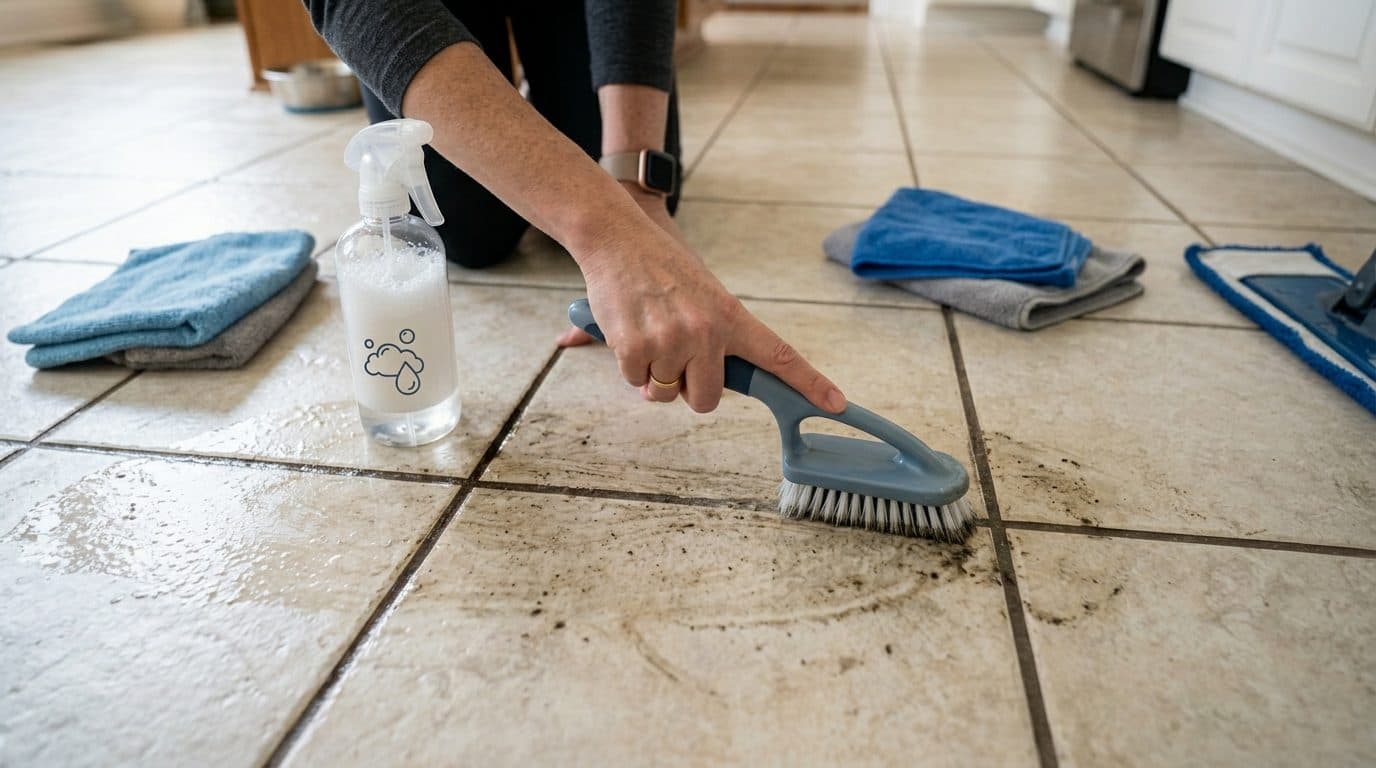
Most dark grout got that way from the mop.
Grout sits a hair lower than the tile around it, and it's porous. Every time a mop pushes gray water across the floor, some of that water runs into the grout lines and soaks in. The tile dries clean because it's glazed. The grout dries a shade darker because the dirt stayed behind in the pores. Do that once a week for three or four years and light gray grout turns the color of a wet sidewalk.
Add the yard sand that rides in on sneakers and dog feet, kitchen grease near the stove, and soap film in the bathroom, and you've got the full recipe. A lot of it comes out, though. Here's how to go after it yourself, and where the line is.
A careful method you can do on a Saturday
Pick a test area first, about three feet square, somewhere you'll notice the difference. A spot by the back door or in front of the kitchen sink works well.
- Figure out what the tile is. Ceramic and porcelain are forgiving. Natural stone like travertine, marble, or slate is not, because vinegar and other acids etch it. If you aren't sure, treat it as stone and stick to a pH-neutral cleaner.
- Get the dry grit up first. Vacuum with the hard floor setting, then run the crevice tool along the baseboards and cabinet toe kicks where the mop never reaches. Wet grit becomes mud, and mud is exactly what you're trying to remove from the grout.
- Apply a grout-safe cleaner along the lines and wait. Five to ten minutes of dwell time does more than twenty minutes of scrubbing. Keep the section small enough that the cleaner doesn't dry before you get to it.
- Brush with a nylon grout brush. Short strokes along the line, steady pressure, nothing heroic. If a line won't lighten, add a little more cleaner and wait again.
- Lift the dirty solution off the floor. This is the step almost everyone skips. Wipe the section with a clean microfiber towel and flip it to a fresh side as soon as it looks gray. If you leave that loosened grime sitting there, it settles right back into the grout as it dries.
- Rinse lightly. A spray bottle of clean warm water, a light mist, then wipe again with a fresh towel. Flooding the floor sends dirty rinse water straight back into the pores.
- Dry it fast. Towel the section dry and run a fan if the room is humid. In a Lexington bathroom in July, air drying can take long enough for the lines to wick up whatever's left.
Look at the test area the next morning, once it's completely dry. Grout always looks lighter wet. Dry is the only honest read.
What to leave in the garage
Wire brushes and drill-mounted scrub pads take off the grout surface along with the dirt. Rough grout catches more soil, so the lines go dark again faster.
Bleach can lighten the color for a while, but on colored grout it can leave blotches, and it does nothing for the grease and film that are holding the dirt in place. Never mix it with ammonia or acid cleaners.
"Shine" mop products and heavy doses of floor soap leave a coating that grabs dirt. If your tile feels faintly tacky in bare feet or looks hazy when the sun hits it at an angle, that film is part of your grout problem too. Cut back to a small amount of cleaner or plain warm water for routine mopping, and change the water when it starts to look cloudy.
Kitchens and bathrooms need slightly different attention. Near the stove and the trash can, it's mostly grease mixed with grit, so a degreasing cleaner does the most good. In the bathroom it's soap scum and moisture, and running the exhaust fan for twenty minutes after showers helps the grout stay lighter between cleanings.
When the DIY method stops being worth it
Hand scrubbing works on a small bathroom. It's a different story across a whole kitchen, breakfast nook, and laundry room, on your knees, three feet at a time.
It's probably time for a professional clean if:
- Your test patch barely changed after two rounds.
- The lines brighten, then slide back to gray within days.
- The floor is big enough that hand work would eat a whole weekend.
- You've got stone tile and you don't want to guess about products.
For tile, we bring a machine buffer. The cleaning solution goes down on the floor and gets time to work, then the buffer's brush scrubs it across the tile and down into the grout lines with steady, even pressure no one can match by hand. After that, the loosened grime is picked up off the floor so it isn't left to dry back into the pores. The whole floor gets the same treatment, so you don't end up with one bright patch where somebody tried a new product.
Results depend on the grout. Lines that are only dirty usually come up several shades. Grout that's cracked, crumbling, or stained by something like rust or a dye spill may improve less, and the technician will point that out during the walkthrough before any work starts. You'll have the price at that point too.
To keep it from creeping back, the habits are simple. Dry mop or vacuum the busy areas a few times a week, mop with very little product, and get the dirty water off the floor before it has a chance to dry.
More on how the service works is on our tile and grout cleaning page, and $45 off tile is listed on our coupons page. If you'd like a rough idea of what your floor needs, give us a call at 803-310-5135 with the rooms and an approximate square footage, and we can talk it through.