
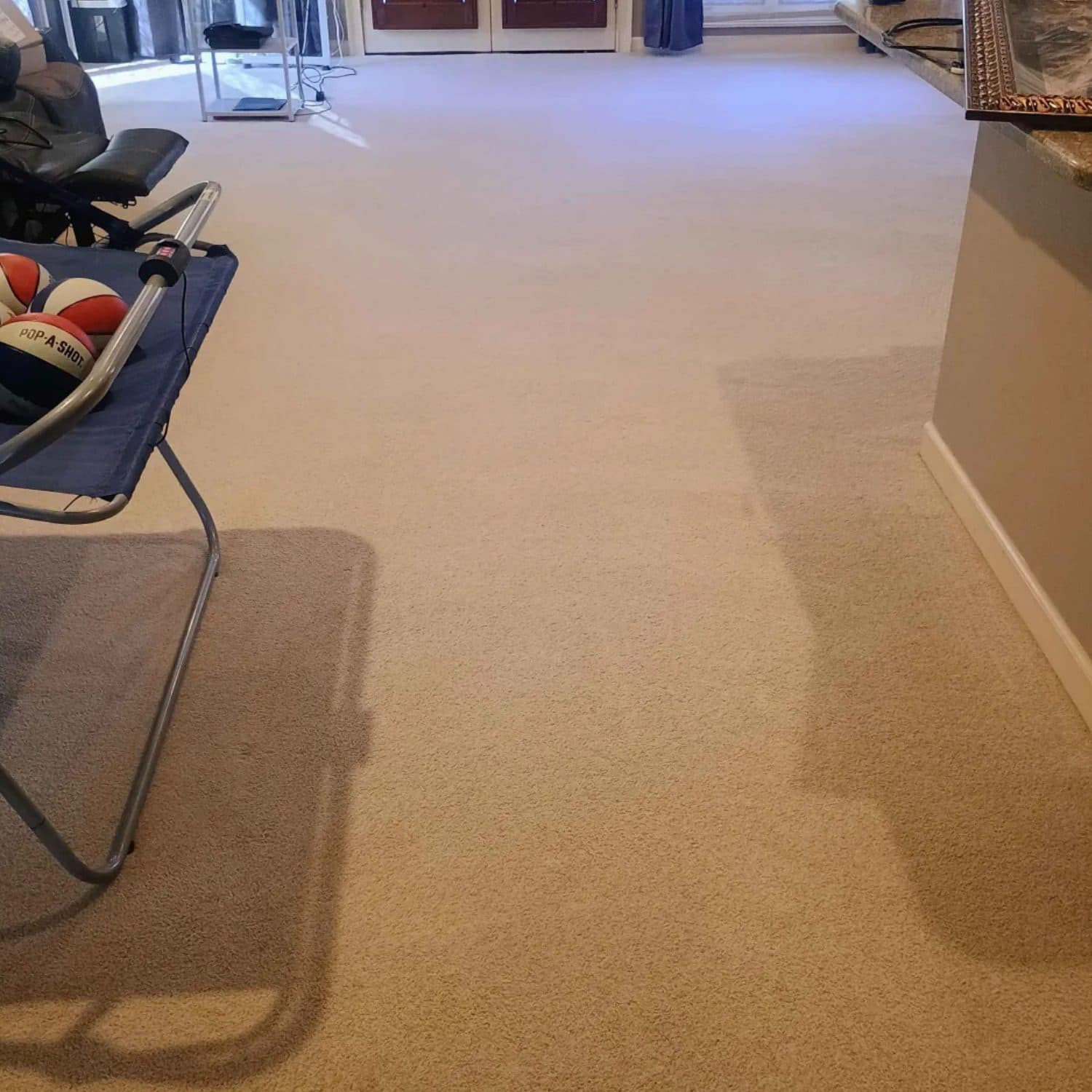
She apologized before our technician got through the door. "It hasn't been cleaned in a long time," she said, the way people do when they're half sure we're going to judge them.
We don't. Overdue carpet is most of what we see. Life in a busy house doesn't leave a free Saturday for the floors, and carpet changes so slowly that nobody notices until a guest is coming over and suddenly the living room looks ten years older than it did last spring.
This one was overdue in the usual ways. The lanes from the kitchen to the sofa and down the hall had gone gray. There were several spots scattered around the room, a couple of them old enough that nobody remembered what they'd been. And there were lighter, crusty patches where a store-bought spot cleaner had been used more than once on the same stain.
Those patches are worth a word, because almost every overdue carpet has them. Run your hand over one and it feels stiff, sometimes a little tacky, next to the soft carpet around it. Often there's a darker ring at the edge where the cleaner wicked outward and dried. Nobody did anything wrong. The bottle said spray, wait, and blot, so they did, and then did it again when the spot came back. Each round left a bit more soap in the fibers. If you've got patches like that, the most useful thing before we come out is to leave them alone. Another coat of product only gives us more to rinse.
What the technician told her up front
Before he cleaned anything, he walked the room with her and went spot by spot. This was the part she mentioned afterward, more than the cleaning itself: he explained her options clearly and didn't oversell.
Here's roughly how that conversation goes on a carpet like this.
The traffic lanes would come back. He was confident about that. Gray lanes are soil and oil packed into the fibers, and soil can be removed. The old spots were a mixed bag. Food, mud, and most drink spills usually lift. Anything that had actually changed the color of the fiber, like bleach, some medications, or a dye that bled out of a rug, would not. And the store-cleaner patches were likely to improve a lot, because the problem there was mostly residue, which grabs dirt and darkens over time.
He also told her there was a chance a couple of spots would come back as faint shadows in the next few weeks. That happens when something soaked deep into the backing wicks up as the carpet dries. If it did, she should call, and he'd come back and treat it again.
That kind of honesty matters, in our view, more than any promise. A technician who says everything will come out either hasn't looked closely or is setting you up to be disappointed.
How the clean actually went
The residue patches got worked on first, because there's no point cleaning over soap. Then the lanes and spots got a pre-treatment, each one matched to what it was, and a few minutes to loosen. The main clean followed with our carbonated solution, which lifts soil to the surface without flooding the carpet. A heavily soiled carpet tempts some cleaners to pour on more water. That's a mistake. More water pushes the dirt down into the pad, where it waits to wick back up.
A few of the spots needed a second pass. One of the old ones needed a third.
By the end, the lanes had blended back in. Most of the spots were gone. One faint mark stayed where something had changed the fiber color, which he had told her might happen. The crusty patches were soft again and matched the rest of the carpet. Everything was dry enough to walk on well before dinner.
She told him something we hear a lot after jobs like this: she'd been close to pricing new carpet.
The photos that make the case
At our team meetings we pass around before and after pictures from the past week. It's a quality check. We look at what worked, what didn't, and what someone tried that the rest of us should copy. Some weeks there's a set of photos that stops the room. A carpet that looked like a lost cause on Monday, gray and spotted everywhere, looking close to new on Tuesday. After all these years it still surprises us how often fabric that looks ruined can be saved.
That's why we'd tell anyone with a carpet like hers to get it cleaned before deciding to replace it. Replacing a room of carpet costs real money. Cleaning it costs a fraction of that, and the worst case is that you find out for sure.
When it isn't worth saving
There are limits, and we'd rather be clear about them. Carpet that's worn through to the backing, unraveling at the seams, or saturated with years of pet urine in the pad has a ceiling no cleaning can raise. If that's what your technician finds, he'll say so during the walkthrough, before you've paid for anything.
For everything short of that, call 803-310-5135 and have someone look. If the walkthrough says it'll come back, you'll know the price before the first spot gets touched. If it says replace, you've lost nothing but a few minutes. Our carpet cleaning page has more on the process.